
 In mining operations, hoses are often exposed to highly abrasive materials such as slurry, sand, gravel and mineral particles.
Choosing the wrong hose can lead to rapid wear, leakage, unexpected downtime and higher replacement costs.
So, how do you choose the right abrasion-resistant mining hose?
## 1. Start With the Material Being Transported
The first question should always be:
**What will be transported through the hose?**
Water, fine slurry, coarse sand and mineral particles create very different levels of abrasion.
For highly abrasive slurry applications, the quality and thickness of the inner rubber layer are particularly important.
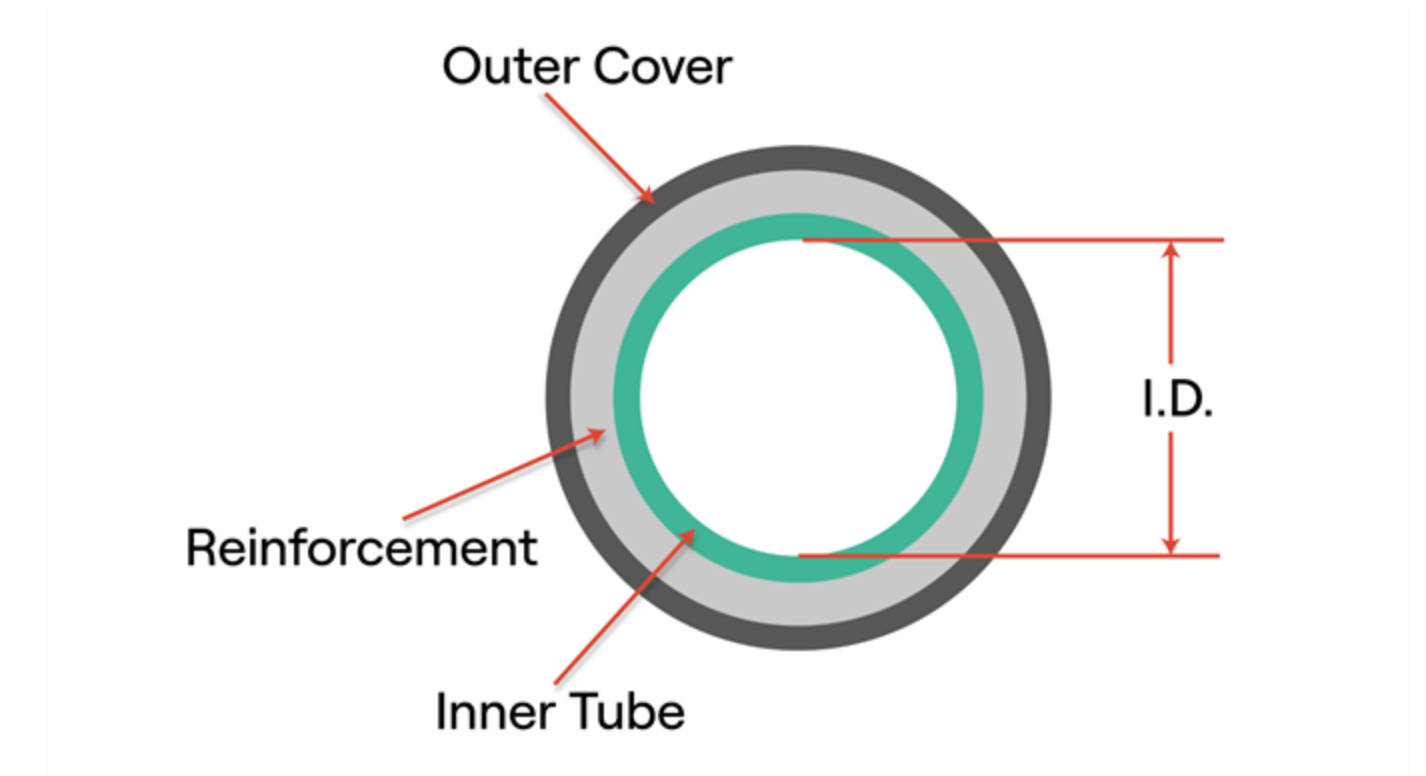
## 2. Confirm the Correct Inner Diameter
Mining hoses are available in many sizes, such as:
* 3 inch
* 4 inch
* 5 inch
* 6 inch
* 8 inch
* 10 inch
* 12 inch
The correct diameter depends on the pump capacity, flow rate and pipeline system.
A hose should not be selected only by price. An unsuitable diameter can affect flow efficiency and overall system performance.
## 3. Check the Working Pressure
Before ordering a mining hose, always confirm the actual working pressure of the system.
For example, a customer may require:
**ID: 4 inch
Length: 10 m
Working Pressure: 10 Bar
Medium: Gold mining slurry**
These details allow the manufacturer to recommend the correct hose construction.
## 4. Abrasion Resistance Matters
In gold mining, sand suction and slurry transportation, the inner tube is continuously exposed to abrasive particles.
A good mining hose should provide:
* High abrasion resistance
* Strong reinforcement
* Good flexibility
* Pressure resistance
* Weather resistance
* Reliable performance under demanding mining conditions
However, hose service life is not determined by the hose alone.
Particle size, slurry concentration, flow velocity, pressure, bending radius and operating conditions can all affect wear.
## 5. Don't Forget the Connections
The hose connection is another important part of the system.
Depending on the application, mining hoses can be supplied with flanges or other types of couplings.
Before production, it is important to confirm:
**Flange size + flange standard + bolt-hole dimensions + connection method**
For customized connections, providing a drawing or clear photo with dimensions can prevent installation problems.
## 6. Give Your Supplier Complete Information
If you need a quotation for a mining hose, providing the following information will make the process much faster:
1. Inner diameter
2. Length per hose
3. Working pressure
4. Transported material
5. Suction or discharge application
6. Connection/flange requirements
7. Quantity
8. Destination country or port
The more complete the operating information is, the easier it is to select the correct hose.
## Conclusion
For mining applications, the cheapest hose is not always the most economical choice.
A properly selected abrasion-resistant mining hose can help reduce replacement frequency, unexpected downtime and maintenance costs.
If you are selecting hoses for **gold mining, slurry transportation, sand suction or dredging applications**, feel free to share your working conditions and specifications.
We are happy to discuss the appropriate hose solution for your application.
#MiningHose #SlurryHose #GoldMining #MiningEquipment #MiningIndustry #RubberHose #SlurryTransportation #Dredging